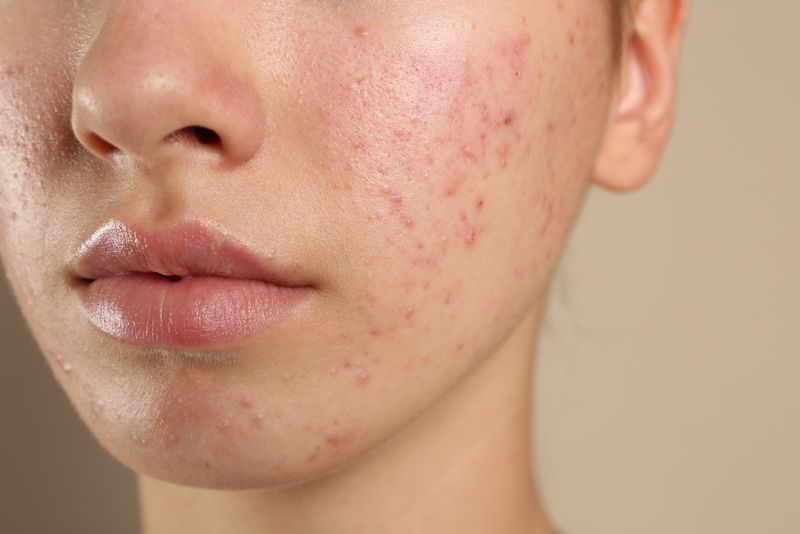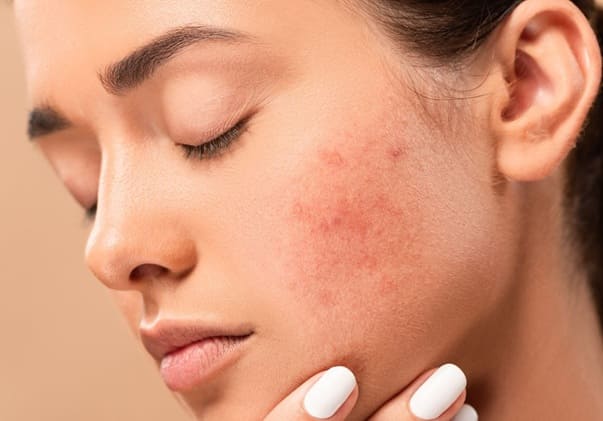

Nodular acne inflicts a unique form of suffering. These rock-hard lumps buried deep beneath the skin throb with pain at the slightest touch, resist every topical treatment, and linger for weeks or months. Unlike surface pimples that come and go, nodules establish themselves as persistent, painful residents that transform daily activities like washing your face or resting on a pillow into uncomfortable ordeals.
At Honeydew, we understand that nodular acne requires more than patience and gentle care—it demands powerful, targeted treatment to prevent the permanent scarring these deep lesions frequently cause. Our providers are experienced in comprehensive approaches that address nodular acne at its source, providing relief from both the physical pain and emotional distress of these severe breakouts.
Understanding Nodular Acne: Beyond Surface-Level Breakouts
Nodular acne develops deep within the dermis when severe inflammation causes complete follicular rupture. Unlike typical pimples that remain relatively contained, nodules result from inflammatory material spreading into surrounding tissue, creating firm, painful lumps that never develop a visible head.
These lesions measure 5mm or larger—substantially bigger than typical acne—and feel like hard marbles embedded beneath the skin. The depth and extent of inflammation distinguish nodules from all other acne types, explaining their persistence and resistance to topical treatments.
Nodular acne represents one of the severely inflamed lesion types that requires aggressive treatment to prevent permanent tissue damage and scarring.
The Formation Process: Why Nodules Develop
Nodular acne begins like other acne but escalates dramatically. The four primary factors—excess sebum, abnormal keratinization, bacterial growth, and inflammation—operate at extreme levels in nodular acne.
The process starts when dense plugs of sebum and dead skin cells completely obstruct follicles. P. acnes bacteria proliferate in this environment, triggering an intense immune response. The inflammatory reaction is so severe that it ruptures the follicle wall deep in the dermis.
Once rupture occurs, inflammatory contents—bacteria, sebum, cellular debris—spread into surrounding tissue. The body attempts to wall off this foreign material, creating the characteristic firm nodule. This deep inflammatory process explains why nodules feel so different from surface acne—they represent the body's attempt to contain a dermal inflammatory crisis.
Why Nodular Acne Requires Systemic Treatment
The depth of nodular acne places it beyond the reach of topical medications. Even prescription-strength topicals cannot penetrate deeply enough to address inflammation occurring in the dermis. This fundamental limitation makes systemic treatment essential for nodular acne.
Additionally, the severity of inflammation in nodular acne overwhelms what topical anti-inflammatories can manage. The inflammatory cascade creating nodules requires systemic intervention to interrupt and resolve.
Most critically, nodular acne's high scarring potential demands aggressive treatment. The deep inflammation destroys dermal architecture, creating depressed scars that are difficult to treat once formed. Every untreated nodule increases the risk of permanent scarring.
First-Line Systemic Treatments
When patients present with nodular acne, dermatologists typically begin with oral medications to control inflammation and prevent new nodule formation.
Oral Antibiotics: Controlling Inflammation
Doxycycline serves as the primary oral antibiotic for inflammatory nodular acne. Beyond antibacterial effects, these medications provide powerful anti-inflammatory action essential for calming nodular inflammation.
For nodular acne, higher initial doses (100-200mg daily) may be necessary to achieve adequate control. The anti-inflammatory effects often become apparent within 2-4 weeks, though complete resolution of existing nodules takes longer.
Alternative antibiotics like Duricef provide options for patients unable to tolerate tetracyclines. The key is achieving sufficient anti-inflammatory effect to prevent new nodule formation while existing lesions resolve.
Combination with Topical Therapy
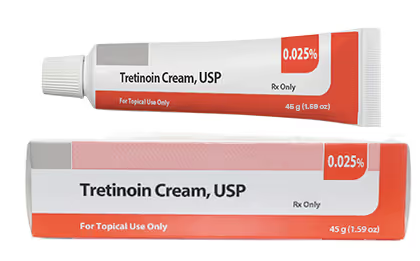
While topicals alone cannot treat nodular acne, they play a supporting role when combined with systemic treatment. Tretinoin helps normalize follicular keratinization, potentially preventing the initial plugging that leads to nodules.
Topical clindamycin combined with benzoyl peroxide provides additional antimicrobial effects at the skin surface, helping prevent comedonal acne from progressing to nodular lesions.
Hormonal Therapy for Nodular Acne
Many cases of nodular acne, particularly in adult women, have significant hormonal drivers that must be addressed for successful treatment.
Spironolactone for Hormonal Nodular Acne
Spironolactone can dramatically improve hormonally-driven nodular acne. By blocking androgen effects on sebaceous glands, it reduces the excess oil production that contributes to nodule formation.
Women who develop painful nodules along the jawline and lower face often respond particularly well to spironolactone. The medication addresses the hormonal trigger, preventing new nodules while allowing existing ones to resolve.
Dosing typically ranges from 50-200mg daily, with higher doses sometimes necessary for nodular acne. Gradual dose escalation minimizes side effects while building to therapeutic levels.
Isotretinoin: The Definitive Solution for Nodular Acne
For persistent nodular acne, Accutane (isotretinoin) offers the most comprehensive and effective treatment. This medication is particularly effective for nodular acne, addressing all underlying causes simultaneously.
Why Isotretinoin Excels at Treating Nodules
Isotretinoin's unique mechanism makes it ideal for nodular acne. By reducing sebum production by up to 90%, it eliminates the oil that initiates nodule formation. The medication also normalizes keratinization, preventing the dense plugs that trigger nodular inflammation.
The anti-inflammatory effects of isotretinoin are particularly valuable for nodular acne. It suppresses the excessive inflammatory response that creates nodules, allowing existing lesions to resolve while preventing new ones.
Unlike other treatments requiring continuous use, isotretinoin often provides lasting remission after a single course. For patients suffering from recurrent painful nodules, this represents true freedom from their condition.
Dosing Considerations for Nodular Acne
Nodular acne often requires careful isotretinoin dosing to balance efficacy with tolerability. Starting at lower doses (20-40mg daily) helps minimize initial flaring, which can be dramatic with nodular acne.
Low-dose Accutane protocols may be particularly suitable for nodular acne patients. By extending treatment duration with lower daily doses, these regimens reduce side effects while still achieving excellent clearance.
Absorica's improved absorption provides more consistent results, valuable for ensuring adequate treatment of stubborn nodular lesions.
Managing Active Nodules
While systemic treatments work to prevent new nodules, managing existing lesions requires additional strategies to minimize pain and scarring.
Intralesional Corticosteroid Injections
For particularly large or painful nodules, intralesional steroid injections provide rapid relief. These injections deliver corticosteroids directly into the nodule, dramatically reducing inflammation within 24-72 hours.
While not addressing underlying causes, these injections can prevent scarring from severe nodules and provide relief during the weeks needed for systemic treatments to take effect. Multiple injections may be needed for persistent nodules.
Proper Home Care
Never attempt to squeeze or pick at nodular acne. The deep location makes extraction impossible, and manipulation significantly increases scarring risk while potentially spreading inflammation.
Warm compresses can provide comfort and may help promote natural resolution. Apply for 10-15 minutes several times daily to increase blood flow and support healing.
Gentle cleansing prevents additional irritation. Use lukewarm water and mild cleansers, avoiding scrubbing or aggressive manipulation of nodular areas.
Preventing Nodular Acne Scarring
The deep inflammation of nodular acne frequently causes scarring, making prevention crucial. Early, aggressive treatment represents the best scar prevention strategy—every day of delayed treatment increases scarring risk.
During active treatment, ingredients that support healing can minimize scarring potential. Tretinoin stimulates collagen production, potentially improving healing and reducing scar formation.
Sun protection is essential, as UV exposure can worsen inflammation and increase post-inflammatory hyperpigmentation. Daily broad-spectrum sunscreen prevents additional skin damage during the healing process.
Once nodular acne is controlled, early scar treatment improves outcomes. Procedures should wait until active inflammation resolves completely, as treating scars while new nodules form proves counterproductive.
Special Considerations for Nodular Acne
Certain factors require special attention when treating nodular acne.
Location-Specific Challenges
Nodular acne on the back and chest presents unique challenges. These areas are difficult to reach for topical application and may require modified treatment approaches. Oral medications become even more important when nodules affect hard-to-treat areas.
Clothing friction can exacerbate truncal nodular acne. Wearing loose, breathable fabrics and avoiding tight straps or belts over affected areas reduces irritation.
Nodular Acne and Skin Color
Darker skin tones face increased risk of post-inflammatory hyperpigmentation from nodular acne. These dark marks can persist for months after nodules resolve, requiring additional treatment consideration.
Early, aggressive treatment becomes even more critical to prevent both scarring and persistent hyperpigmentation. Incorporating ingredients like azelaic acid that address pigmentation while treating acne provides dual benefits.
Occupational Considerations
Certain occupations may aggravate nodular acne through environmental exposures or required protective equipment. Healthcare workers wearing masks, athletes with helmet contact, or workers exposed to oils may experience worsening.
Treatment plans must account for these factors, potentially requiring more aggressive therapy or protective strategies to manage occupational triggers.
Treatment Timelines and Expectations
Understanding realistic timelines helps maintain treatment compliance during the challenging journey of treating nodular acne.
With oral antibiotics, initial improvement in inflammation often occurs within 2-4 weeks, though existing nodules may take 6-8 weeks to fully resolve. New nodule formation should decrease within the first month of treatment.
Spironolactone typically shows results within 3-6 months, with gradual improvement as hormone levels stabilize. Some women notice decreased oiliness within weeks, preceding visible improvement in nodules.
Isotretinoin treatment for nodular acne usually spans 5-6 months. Initial worsening is possible, particularly with numerous deep nodules. Most patients see significant improvement by month three, with continued clearing throughout treatment.
Maintenance After Clearing Nodular Acne
Successfully clearing nodular acne represents a significant achievement, but maintaining results requires ongoing attention. The tendency toward severe inflammation that created nodules initially often persists.
Post-treatment maintenance might include continued topical retinoids to maintain normalized keratinization, periodic benzoyl peroxide to prevent bacterial overgrowth, and hormonal therapy continuation for appropriate patients.
Some patients with recurrent nodular acne require repeated isotretinoin courses. Modern low-dose protocols make repeated treatment more tolerable when necessary.
Regular follow-up allows early intervention if nodules begin returning. Catching recurrence early prevents progression back to severe nodular disease.
Your Solution for Nodular Acne Treatment
At Honeydew, we specialize in comprehensive treatment for nodular acne that addresses both immediate suffering and long-term skin health. Our providers understand the urgency of treating these painful lesions effectively.
We offer the full spectrum of nodular acne treatments, from rapid control with doxycycline to hormonal management with spironolactone. For definitive treatment, we provide Accutane with innovative low-dose protocols that minimize side effects.
Our custom compounding services create personalized topical support for systemic treatment. Through our entirely online platform, we eliminate barriers to accessing expert care when painful nodules demand prompt treatment.
Don't let nodular acne control your life with pain and scarring risk. With proper treatment, even severe nodular acne can be successfully controlled and cleared. Let us help you access the powerful treatments needed to overcome these deep, painful breakouts and achieve the clear, comfortable skin you deserve.